From Bank Reconciliation to AI-Powered Tools: The Future of Automated Reconciliation Software
Discover how AI-powered reconciliation software transforms financial close. Automate bank reconciliation, reduce errors, and streamline accounting workflows.
Introduction
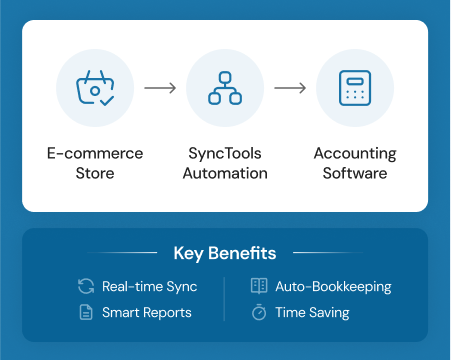
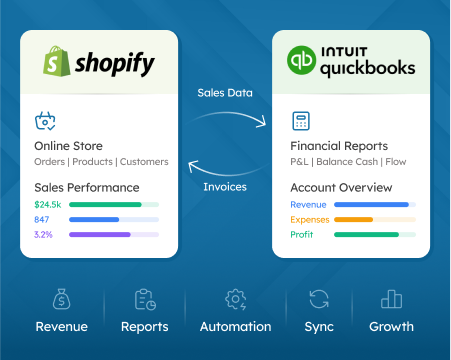
TL;DR: Automated reconciliation software matches transactions across platforms, banks, and accounting systems without manual spreadsheet work. For eCommerce sellers, that means Shopify and Amazon payouts matching your bank deposits in one click rather than hours of manual cross-checking. SyncTools handles this layer for QuickBooks Online and Xero - connect your sales channels, and every settlement reconciles automatically.
In today’s fast-paced financial world, reconciliation software isn’t just “nice to have” - it’s essential.
Whether you’re running a small startup or managing a global enterprise, getting reconciliation right ensures your books are accurate:
- Your books are accurate
- Your finance team isn’t buried in spreadsheets
- Your reporting is always ready for auditors
This guide is worth your time because it cuts through the fluff and gives you a clear, practical roadmap for 2025.
You’ll learn:
- What reconciliation software is
- Why it matters
- How to automate it
- Which tools are leading the way
If you’ve ever been stuck balancing accounts late at night, this article will show you how modern solutions can give you that time back.
1. What is Reconciliation Software and Why is it a Must-Have in 2025?
Think of reconciliation software as your financial detective quietly checking every bank transaction, payment, and journal entry to make sure nothing’s missing or out of place.
In 2025, finance teams face new challenges:
- Multiple bank accounts spread across countries and currencies
- Cloud-based accounting systems that need to stay in sync
- Transaction volumes exploding thanks to e-commerce and digital payments - see the common eCommerce accounting problems this creates
Without a reliable reconciliation solution, it’s easy for errors to slip through.
The result? Inaccurate financial statements, delayed month-end close, and compliance headaches.
Simply put: reconciliation software is the backbone of trustworthy financial reporting.
2. How Does Account Reconciliation Software Work?
Here’s the good news: reconciliation software takes the most tedious parts of the job off your plate.
Here’s what happens behind the scenes:
- Data ingestion - It pulls in transactions from bank feeds, payment gateways, and your accounting system.
- Automated matching - It uses smart rules (and increasingly AI) to match those transactions with your books.
- Exception handling - Anything that doesn’t match gets flagged for your review.
- Clear reporting - You get a clean reconciliation report showing exactly what’s cleared and what still needs attention.
Some tools even get “smarter” over time, learning from how you resolve mismatches and automatically suggesting fixes next time.
3. Why Automate Account Reconciliation Instead of Doing it Manually?
Manual reconciliation is like finding a typo in a dictionary - painfully slow and prone to human error.
Here’s what manual reconciliation often looks like:
- Hours (or days!) spent manually cross-checking spreadsheets
- High risk of missing small discrepancies
- A demotivated finance team stuck doing repetitive work
Now imagine the opposite:
A mid-sized retailer with 20,000 monthly transactions automates reconciliation and slashes hours of work down to minutes.
Those freed-up hours go into:
- Analysis
- Strategy
- Better decision-making
That’s why automation isn’t a luxury anymore - it’s the standard in 2025.
4. What Features Should You Look for in the Best Account Reconciliation Software?
Not all reconciliation software is created equal.
When shopping around, look for:
- Automated matching for deposits, withdrawals, and payments
- Multi-account bank reconciliation across regions and currencies
- Drill-down reporting so you can investigate issues fast
- Cloud-based access for remote or distributed teams
- Integrations with QuickBooks, Xero, NetSuite, SAP, etc.
- AI-powered matching for faster, smarter exception handling
- Audit-ready logs to keep regulators happy
The best tools don’t just automate work - they build trust in your numbers.
5. How Can Reconciliation Software Simplify Financial Close?
Month-end close doesn’t have to be a fire drill.
Reconciliation software helps you:
- Close faster - Cutting days off your close cycle
- Improve accuracy - Fewer errors make auditors (and CFOs) happy
- Strengthen compliance - Automated audit trails keep regulators satisfied
Companies using solutions like BlackLine often report cutting close times by 30–50%, which is huge for finance teams under pressure.
6. Is Automated Reconciliation Software Right for Every Business?
Short answer: yes - but the right tool depends on your size and complexity.
- Small businesses - Can start with basic bank reconciliation or spreadsheet checks
- Mid-sized companies - Usually need automated bank and ledger reconciliation
- Enterprises - Require full-blown account reconciliation solutions with ERP integration
Consider your transaction volume, number of entities, and industry-specific needs (like inventory-heavy retail or intercompany reconciliations).
7. Bank Reconciliation Software vs. Full Account Reconciliation Tools
These terms often get mixed up, so let’s clarify:
- Bank reconciliation software just matches bank transactions to your books.
- Account reconciliation software covers the entire balance sheet, intercompany accounts, and even multi-entity reconciliations.
If you’re just getting started, bank reconciliation software may be enough. As your complexity grows, you’ll want the full suite.
8. How to Choose the Right Account Reconciliation Software in 2025
Here are the key questions to ask:
- Will it integrate with my accounting software or ERP?
- Can it handle multiple bank accounts and thousands of transactions?
- Does it provide real-time dashboards for finance leaders?
- Is it cloud-based with enterprise-grade security?
- Does it leverage AI to flag anomalies and save time?
Choose a solution that not only works today but grows with you.
9. Top 10 Account Reconciliation Software Options for 2025
Here are the leaders in 2025:
| Software | Best Fit | Key Features |
|---|---|---|
| BlackLine | Large enterprises | AI-powered matching, compliance workflows |
| Trintech Cadency | Enterprises | Risk management, workflow automation |
| FloQast | Mid-sized companies | Seamless integrations, team collaboration |
| ReconArt | Flexible industries | End-to-end reconciliation |
| Xero | Small businesses | Easy bank feeds, automation |
| QuickBooks Online | SMBs | Built-in bank reconciliation |
| Sage Intacct | Growing firms | Automated matching, detailed reporting |
| Oracle NetSuite | Enterprises | Native ERP reconciliation |
| AutoRek | Financial services | Regulatory-focused |
| HighRadius | Enterprises | AI-powered cash app + reconciliation |
10. How Reconciliation Software Improves Finance Beyond Bank Matching
Reconciliation software is no longer just a “check the box” task. It:
- Improves real-time financial visibility
- Provides audit-ready reports for compliance
- Handles group consolidation and intercompany reconciliation
- Makes financial close smooth and predictable
It’s a finance team’s secret weapon for staying proactive.
11. The Future of Reconciliation: AI + Cloud
The next wave is here:
- AI-powered reconciliation predicts matches and even spots fraud
- Automated exception handling speeds up review
- Cloud platforms let global teams collaborate in real time
By 2025, the businesses that embrace these tools will have cleaner books, faster closes, and happier finance teams.
Key Takeaways
- Reconciliation software keeps your books accurate and audit-ready
- Automation saves time, reduces errors, and improves compliance
- Bank reconciliation tools are great for SMBs; account reconciliation software suits complex organizations
- AI-powered and cloud-based reconciliation is the future and it’s already here
- Choose a tool that integrates with your systems and grows with your business
Frequently Asked Questions
What is automated reconciliation software?
Automated reconciliation software matches bank transactions, payment records, and journal entries against your accounting system automatically - flagging discrepancies for review instead of requiring manual cross-checking.
How does AI improve account reconciliation?
AI-powered reconciliation learns from how your team resolves mismatches and gets smarter over time, suggesting fixes automatically and flagging anomalies that rule-based systems would miss.
What is the difference between bank reconciliation and account reconciliation software?
Bank reconciliation software matches bank transactions to your books. Full account reconciliation software covers the entire balance sheet - intercompany accounts, multi-entity consolidations, and ERP-level reconciliations.
How much time can automated reconciliation save?
Companies using solutions like BlackLine report cutting month-end close times by 30–50%. For a finance team doing 20,000+ monthly transactions manually, automation can reduce hours of work to minutes.
Which reconciliation software is best for small businesses?
Xero and QuickBooks Online include built-in bank reconciliation suited to small businesses. Mid-sized companies typically need dedicated tools like FloQast or ReconArt, while enterprises use BlackLine, Trintech Cadency, or Oracle NetSuite.
Is cloud-based reconciliation software secure?
Enterprise-grade reconciliation platforms use bank-level encryption, role-based access controls, and audit-ready logs - often exceeding the security of on-premise spreadsheet processes.
For eCommerce-specific reconciliation setup, see the Shopify payout reconciliation guide and the eCommerce accounting automation guide.
Next Step: Compare vendors, match features to your needs, and choose the reconciliation solution that frees your finance team from manual work in 2025 and beyond. For eCommerce-specific reconciliation, see the best eCommerce accounting software guide and the QuickBooks eCommerce automation overview.
Ready to automate your accounting?
Connect Shopify, WooCommerce, or Linnworks to QuickBooks, Xero & more. Setup in minutes.